Having a bird accidentally enter your house can cause stress for both you and the bird. Birds inside homes can panic and injure themselves or damage your belongings. It is important to act calmly and follow clear steps to help the bird leave safely. This article explains practical methods to get a bird out of your house quickly and without harm.
Stay Calm and Clear the Area
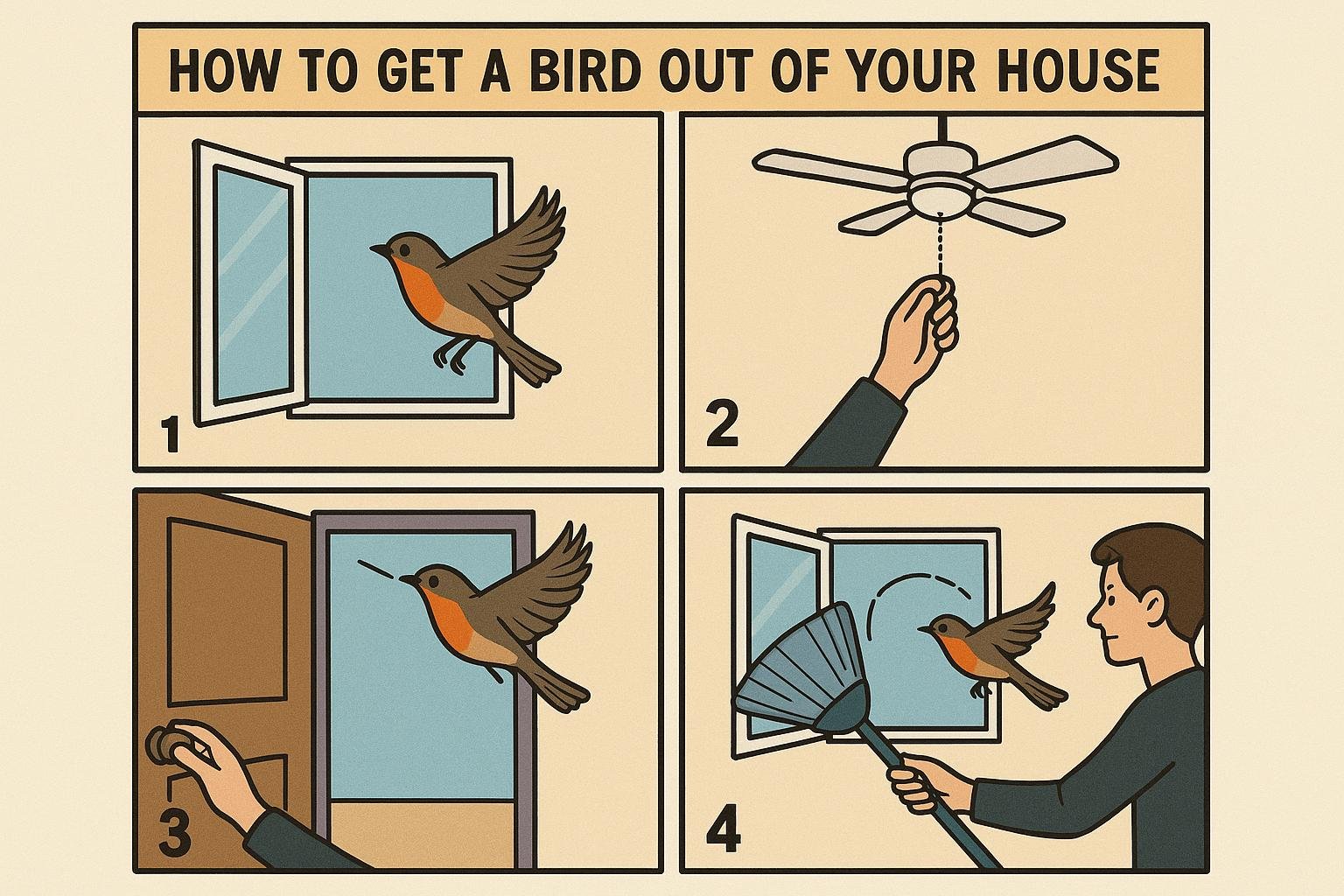
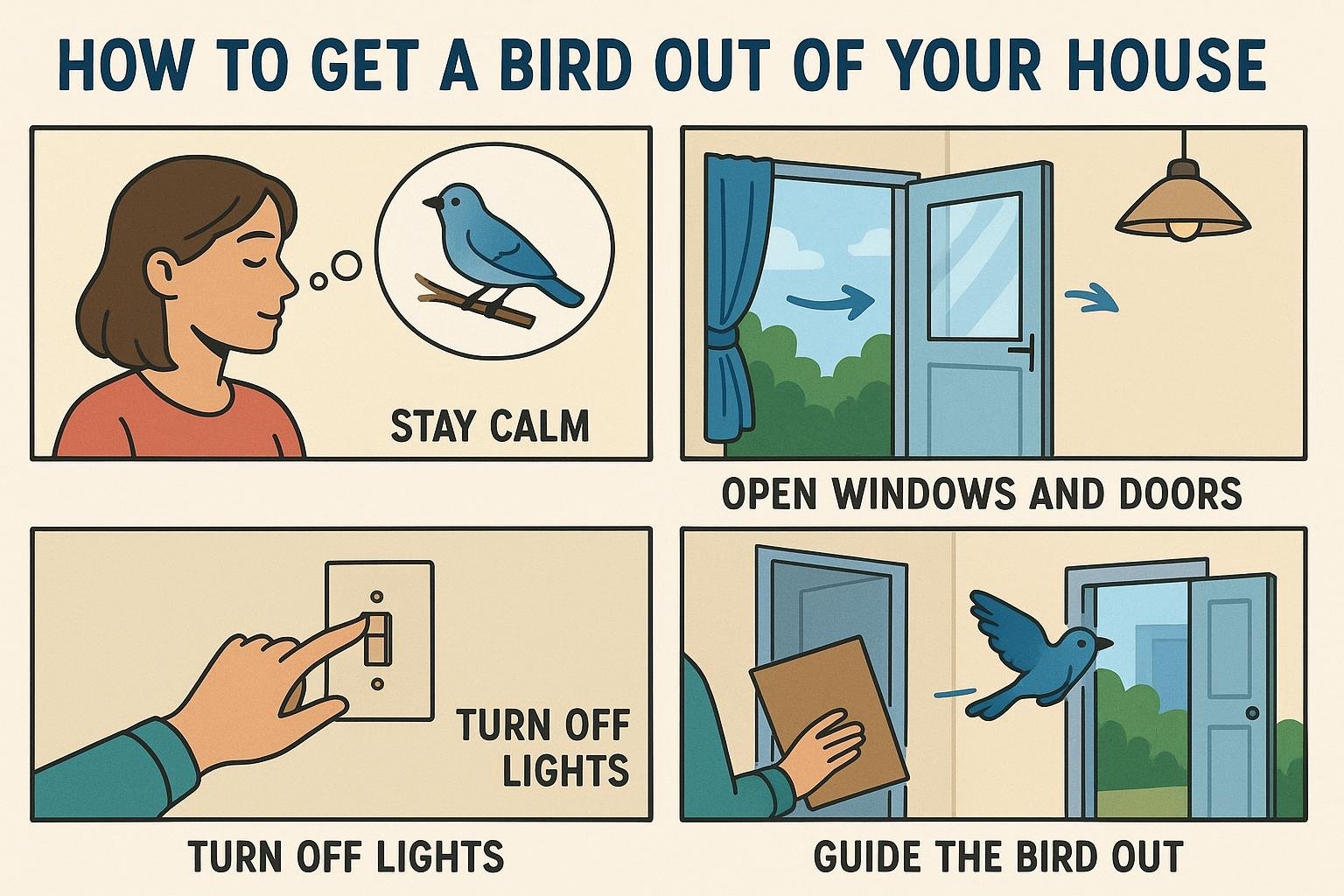
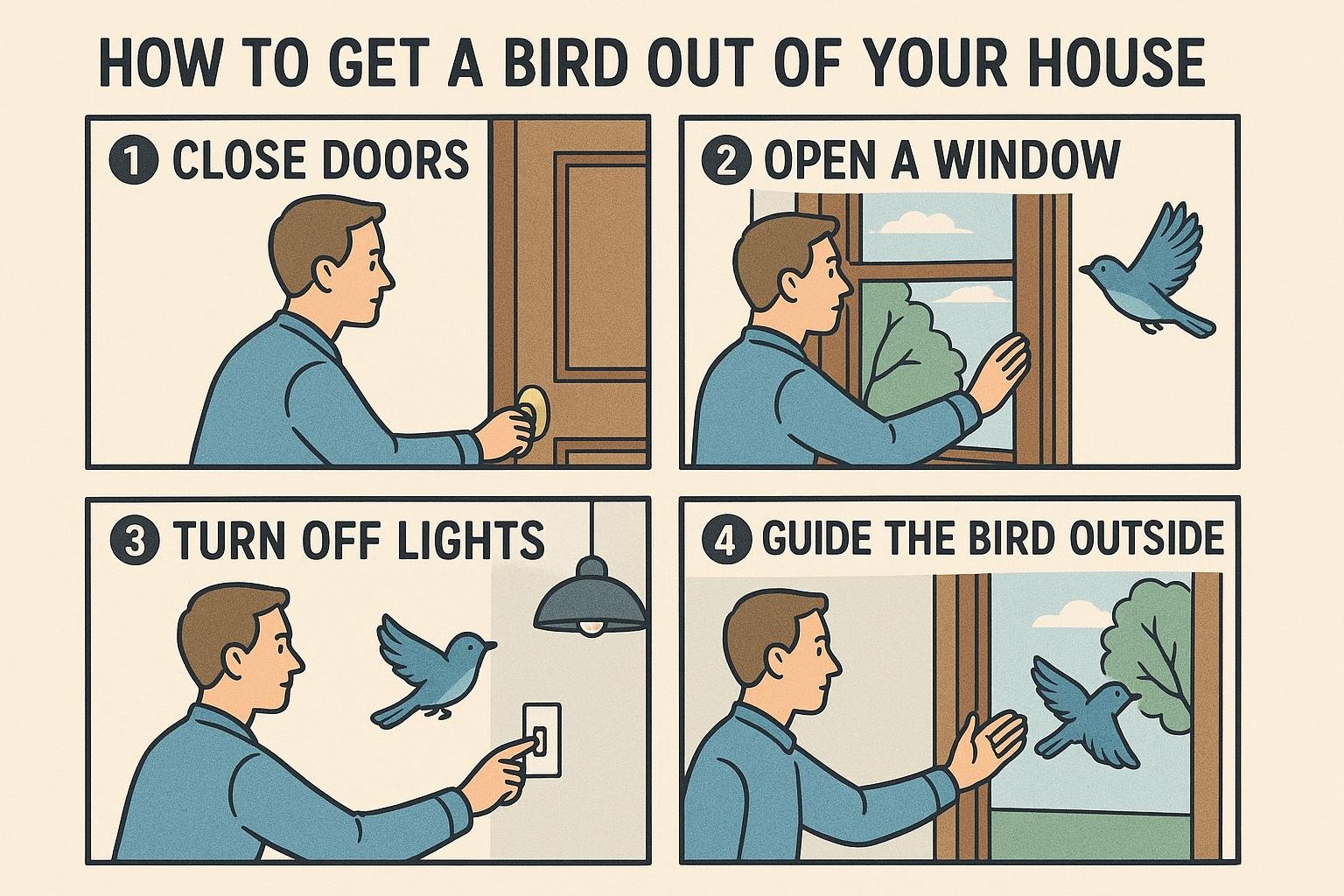
First, stay calm. Sudden movements or loud noises can scare the bird and make it fly erratically. Keep children and pets away. Close doors to other rooms to limit the bird’s space. Open windows and doors that lead outside. This creates an exit path and encourages the bird to leave.
Turn Off Indoor Lights and Use Natural Light
Birds often fly toward light sources. Turn off indoor lights to reduce confusion. Open curtains or blinds to let in natural light from the outside. The brighter outdoor light will attract the bird toward the exit. Avoid using flashlights or lamps, as these can confuse the bird.
Remove Obstacles Along the Exit Path
Clear furniture or objects near exit points. The bird needs a direct path to fly out. Remove close blinds, curtains, or ceiling fans that may block its way. Keep the space open and easy to navigate. This helps the bird see the way out clearly.
Gently Guide the Bird
If the bird does not leave on its own, gently guide it toward the exit. Use a lightweight cloth, towel, or a broom with soft bristles. Approach slowly and carefully. Do not hit the bird. Instead, extend the cloth or broom near the bird to steer it gently outside. Patience is key here.
Use a Box or Container to Capture the Bird
If the bird is calm or resting, you can trap it safely using a box or container. Slowly place the box over the bird. Slide a piece of stiff paper or cardboard under the box to close the opening. Then, carry the box outside and release the bird gently. This method reduces risk of injury to the bird.
Avoid Harmful Actions
Do not try to catch the bird with your bare hands. This can frighten and hurt it. Avoid using sprays, loud noises, or aggressive tactics. These actions increase stress for the bird and may cause damage to your home. Always aim to help the bird leave calmly.
Prevent Future Incidents
After the bird leaves, check how it entered. Close or seal gaps in windows, doors, or vents. Install screens where possible. Keep food and trash covered, as these attract birds inside. Proper maintenance helps avoid repeat visits.
When to Call a Professional
If you cannot get the bird out safely, contact animal control or a wildlife rescue organization. They have equipment and training to handle birds properly. This is important if the bird looks injured or trapped in hard-to-reach places. Check local resources for assistance.
You can find more advice on this subject by visiting Audubon Society or The Humane Society’s guide. The National Wildlife Federation also offers helpful tips.
Specific Example: Getting a Sparrow Out of Your House
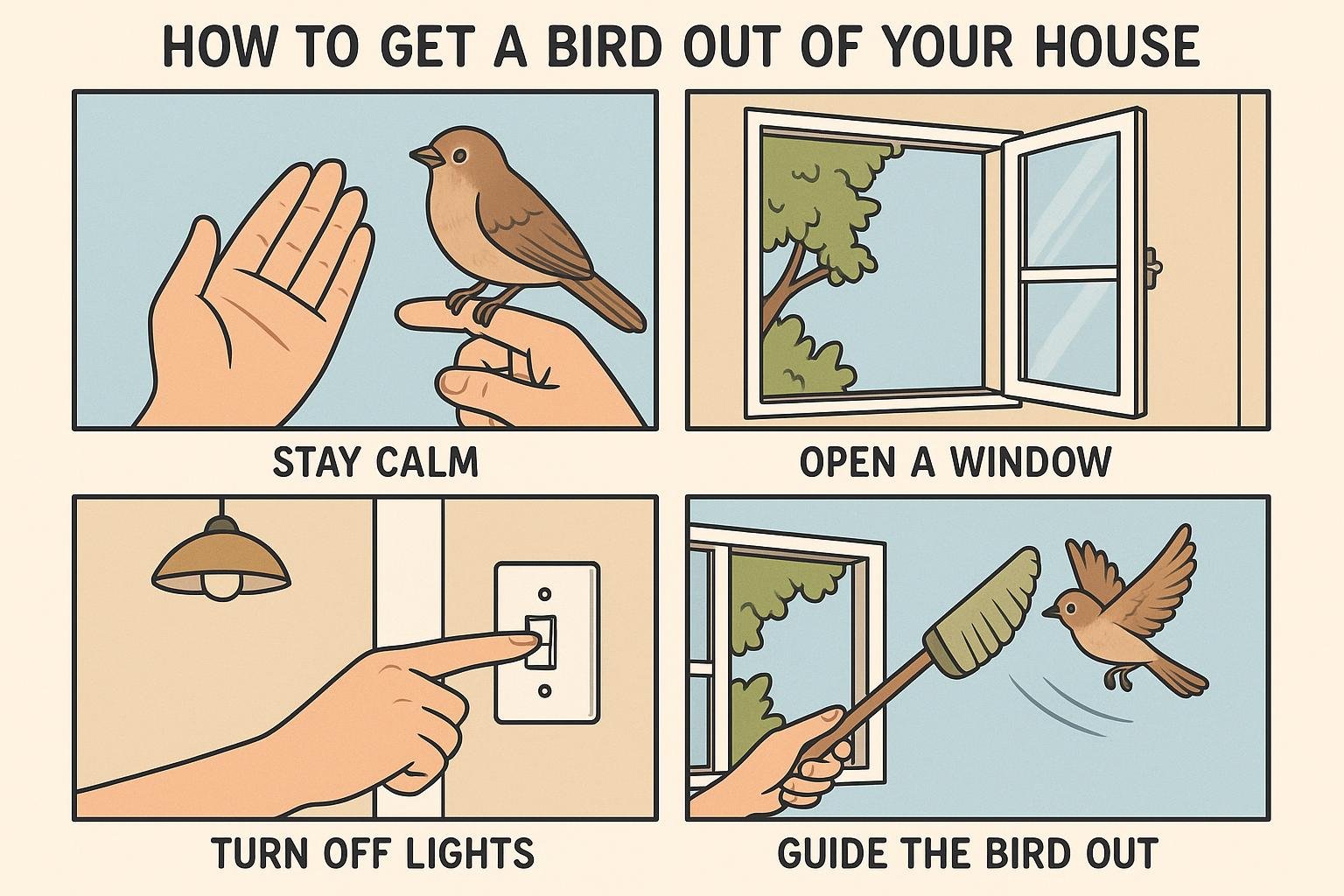
Sparrows are common house intruders. To remove a sparrow, open all windows and doors in the room it occupies. Create a clear, well-lit exit path. Turn off all indoor lights and wait quietly. If the bird does not fly out, use a lightweight towel to nudge it gently toward the exit. Avoid chasing it, as sparrows are quick and may get more scared.
Pros and Cons of Common Bird Removal Methods
| Method | Pros | Cons |
|———————–|————————————-|—————————————–|
| Opening Windows | Natural, no harm to bird | Bird may not find exit immediately |
| Using a Box | Safe capture, prevents escape inside| May stress bird if done roughly |
| Guiding With Towel | Direct control, gentle | Requires patience and careful handling |
| Calling Professionals | Safe for bird and human | Possible cost, less immediate |
Summary and Best Practices
Getting a bird out of your house requires calm, clear actions. Open windows, turn off lights, clear paths, and guide the bird gently. Avoid harm and stress. Seal entry points after removal to prevent future problems. If needed, ask professionals for help.
For more detailed information, also explore how to get a bird out of your house.
By following these steps, you ensure both your safety and that of the bird. Helping a bird find its way outdoors can be a smooth and stress-free process with the right approach.